Give the idea a job.
Decide whether you are explaining, demonstrating, or inviting a next step. One clear purpose makes it easier to choose what belongs in the post and what can wait for another piece.
THE SOCIAL CONTENT NOTEBOOK
Shape your next idea around the people reading it. Explore social content, thoughtful storytelling, and a five-part brief that brings a scattered draft into focus.
Explore Social MediaAmanda Michelle Designs · Ideas to read, reflect on, and put to use.
01 / FIND THE THREAD
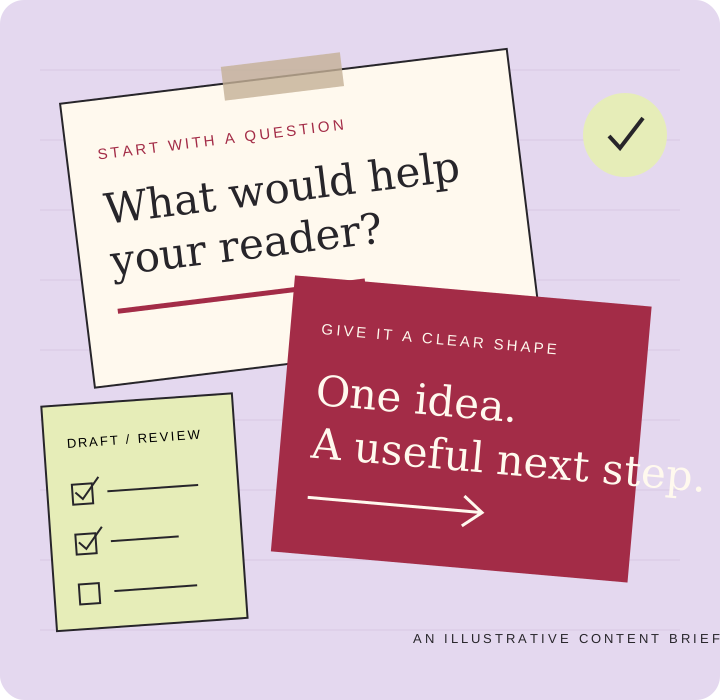
Good planning begins with a decision: what should this piece help someone understand? Use these three prompts before opening a design tool or drafting a caption.
Decide whether you are explaining, demonstrating, or inviting a next step. One clear purpose makes it easier to choose what belongs in the post and what can wait for another piece.
Write down the reader’s question in ordinary language. Consider what they already know and what might stop them moving forward. Specific questions tend to produce more useful drafts than a broad instruction to be engaging.
Choose one takeaway, then support it with an explanation or relevant example. Let the image and caption work together. If either introduces a separate subject, simplify the piece before adding more detail.
02 / THE READING ROOM
Follow a question into the archive. These existing articles offer starting points for thinking about social media and storytelling; read dated guidance with the context of its publication in mind.
Explore the site’s introduction to social content.
↗SOCIAL CONTENT · JUN 15, 2018Consider the questions behind audience interaction.
↗STORY & STRUCTUREThink about how a narrative holds an idea together.
↗Keep exploring: Browse the Blog archive Discover Other topics
03 / FROM NOTE TO DRAFT
Use five lines to turn a loose idea into a working direction. This is an illustrative planning template, ready to copy into your own notebook and adapt to the task.
Once the draft exists, review it in order: meaning, accuracy, readability, then presentation. Check names and links, remove unsupported claims, and make sure the next step matches what the reader has just learned.
Read about social content and search ↗04 / WORKING QUESTIONS
Digital marketing is the use of online channels to help people discover, understand, and interact with a business. A website, search content, email, and social posts can each play a different role. Begin by deciding what a person needs to know before choosing the channel or format.
Choose a question your intended reader actually needs answered. Look at recurring enquiries, confusing steps, or decisions people face before using a service. Turn one of those questions into a focused post, then check that the opening, supporting detail, and next action all serve the same purpose.
No. A useful content mix can explain a process, answer a question, introduce an idea, or help someone compare options. A sales message fits when the reader has enough context to act. Keep the next step relevant to the particular post rather than attaching the same request everywhere.
Use a clear opening, short paragraphs, and specific language. Explain unfamiliar terms and remove details that distract from the main point. For images, consider legible text, meaningful alternative descriptions, and sufficient contrast. Read the draft on a small screen before deciding that its structure and visual hierarchy are finished.
A useful brief names the audience, the question, the main takeaway, the supporting information, and the intended next step. Add a format and an owner if you are collaborating. This small set of decisions gives a draft direction without requiring a complicated planning document or a fixed publishing timetable.
Social content can introduce a subject while a website provides room for a fuller explanation. Connect the two when the destination genuinely expands on the post. Keep names and messages consistent, check that links work, and avoid sending readers to a page that does not answer the expectation you created.
Evaluate it against the purpose you set before writing. Ask whether the intended reader can understand the point, whether evidence supports factual statements, and whether the next step is clear. When reviewing published work, consider meaningful responses and relevant visits in context instead of judging a post by a single number.
Start with the Social Media section for the site’s social-content reading, or open Blog to browse the archive. The Other section offers a separate collection of topics. Use the article titles to choose a question that matches your current task, and check publication dates when reading about changing tools or platforms.
TAKE AN IDEA WITH YOU
Choose a topic, read with your own audience in mind, and turn one useful observation into the beginning of a draft.
Open the Blog